Miyawaki Forest
A fast-growing mini forest taking root in the Arboretum
Aurora Arboretum Miyawaki Forest
A Miyawaki Forest is a dense, fast-growing native “mini forest” designed to mimic the layered structure of a natural woodland ecosystem. Developed by Japanese botanist Akira Miyawaki, this planting method brings together a diverse mix of native trees and shrubs that grow closely together, helping forests establish more quickly and naturally.
Unlike traditional planting approaches, Miyawaki forests are designed to become self-sustaining in just a few decades rather than centuries. Dense planting encourages rapid growth while creating valuable habitat for pollinators, birds, and other wildlife.
In spring 2025, Arboretum volunteers planted 556 native trees and shrubs across two plots: one using the Miyawaki method and a second control plot using more traditional planting spacing. Over the coming years, volunteers will monitor growth and biodiversity to better understand how this approach performs in an urban Arboretum setting.
The Miyawaki Forest represents an exciting step forward in supporting biodiversity, ecological education, and climate resilience within the Aurora Community Arboretum.
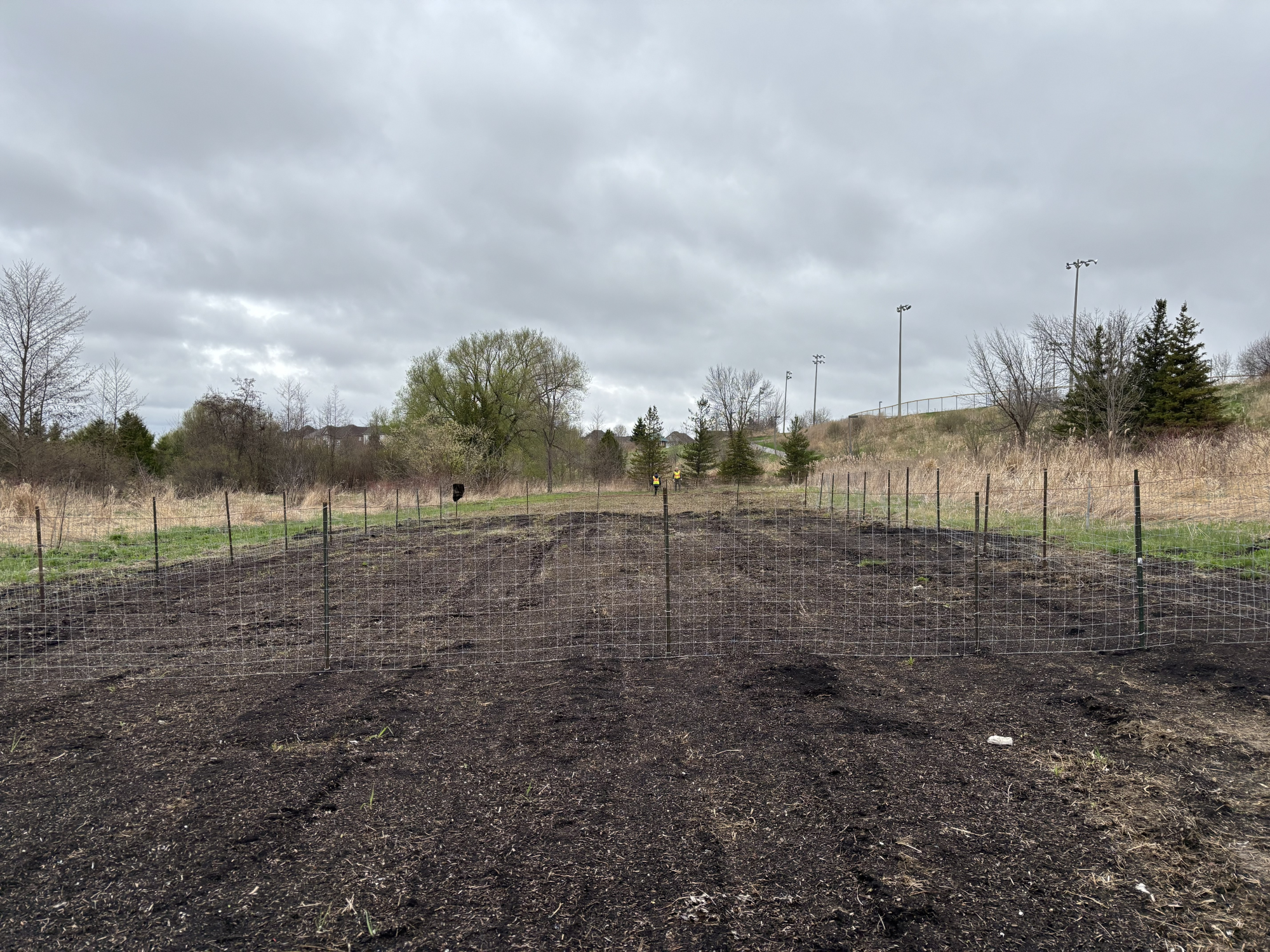
Site Preparation
Before planting: the Miyawaki and control plots were laid out and prepared to compare two different forest establishment methods.

Planting Day
Volunteers plant and mulch the Miyawaki plot, where native trees and shrubs were planted at high density to create a fast-growing mini forest.
What’s Growing in the Miyawaki Forest?
A Miyawaki Forest mimics the layered structure of a natural forest ecosystem. The Arboretum’s mini forest includes 36 native tree and shrub species, each occupying different levels of the forest and working together to create biodiversity, habitat, and resilience.
Canopy Layer
Tall trees that will eventually form the forest’s upper canopy.
Balsam Fir (Abies balsamea)
Basswood (Tilia americana)
Black Cherry (Prunus serotina)
Bur Oak (Quercus macrocarpa)
Hackberry (Celtis occidentalis)
Hemlock (Tsuga canadensis)
Shagbark Hickory (Carya ovata)
Sugar Maple (Acer saccharum)
Sycamore (Platanus occidentalis)
Tamarack (Larix laricina)
Tulip Tree (Liriodendron tulipifera)
Sub-Canopy Layer
Mid-sized trees that help fill the forest with texture, colour, shelter, and seasonal blooms.
Bitternut Hickory (Carya cordiformis)
Black Gum (Nyssa sylvatica)
Eastern Red Cedar (Juniperus virginiana)
Eastern White Cedar (Thuja occidentalis)
Ohio Buckeye (Aesculus glabra)
Red Maple (Acer rubrum)
Swamp White Oak (Quercus bicolor)
Understory Layer
Small trees and shade-tolerant species that support biodiversity and provide food and shelter for wildlife.
Alternate Leaf Dogwood (Cornus alternifolia)
Blue Beech (Carpinus caroliniana)
Common Serviceberry (Amelanchier canadensis)
Eastern Redbud (Cercis canadensis) (photo on sign)
Ironwood (Ostrya virginiana)
Striped Maple (Acer pensylvanicum)
Witch Hazel (Hamamelis virginiana)
Shrub Layer
Low-growing woody plants that provide important habitat, pollinator support, and seasonal berries for wildlife.
American Hazelnut (Corylus americana)
Arrowwood (Vibrunum dentatum)
Black Chokeberry (Aronia melanocarpa)
Broad-leaved Meadowsweet (Spiraea latifolia)
Buttonbush (Cephalanthus occidentalis)
Common Elderberry (Sambucus canadensis)
Grey Dogwood (Cornus racemosa)
Meadowsweet (Spiraea alba)
Ninebark (Physocarpus opulifolius)
Red Elderberry (Sambucus pubens)
Shrubby St. John’s Wort (Hypericum prolificum)
Silky Dogwood (Cornus amomum)
Spicebush (Lindera benzoin)
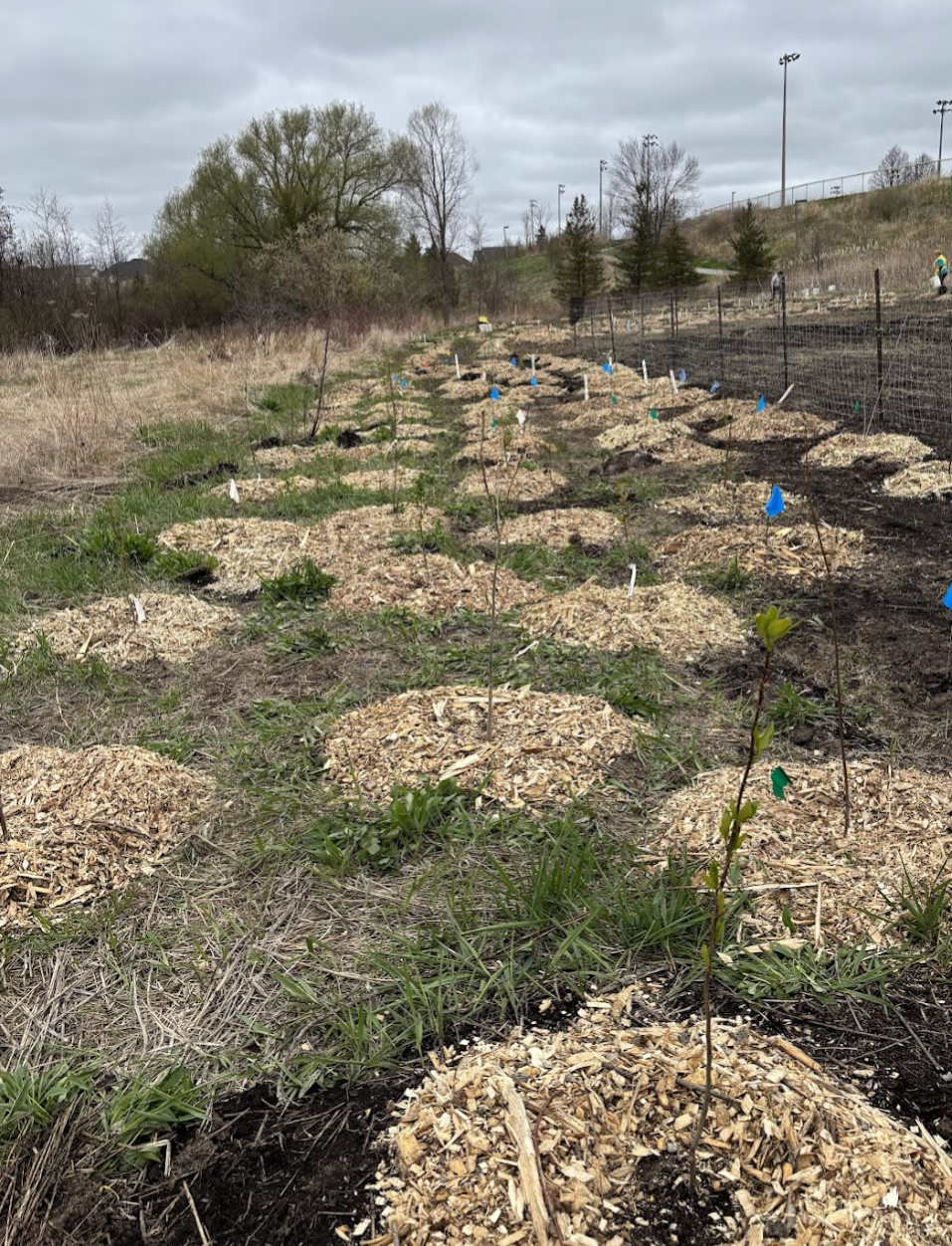
Control Plot
Newly planted native trees and shrubs in the control plot, which will be monitored alongside the Miyawaki Forest over the coming years.
Main Steps to Plan a Mini-Forest
While each site is unique, Miyawaki forests generally follow a few key planning and planting steps:
- Identify native tree and shrub species suitable for the planting area.
- Prepare the site by removing existing vegetation and improving the soil with compost.
- Source native trees and shrubs from reputable growers or nurseries.
- Plant seedlings densely and randomly to mimic a natural forest structure.
- Water regularly and keep the site weed-free during the early establishment period.
Interested in Creating Your Own Mini Forest?
The Aurora Community Arboretum’s Miyawaki Forest is part of a growing movement focused on restoring biodiversity through dense, fast-growing native plantings.
Curious about how mini forests work? The Network of Nature offers a helpful guide to the Miyawaki method, including species selection, planting principles, and site preparation tips.